some image

Having fun, writing about the stuff I like

The Hare With Amber Eyes

Oscar Foulkes December 3, 2011 Books 2 comments

Edmund de Waal, a ceramic artist, is bequeathed a collection of 264 netsuke (small and intricate Japanese carvings) by a great-uncle living in Tokyo. They entered the once-wealthy Ephrussi family in the 1870s when a Paris-based relative, Charles, bought the collection, which he later gave to a Viennese cousin as a wedding gift.

In The Hare With Amber Eyes, de Waal tells the fabulously engaging story of how his family, originating in Odessa, established something of a trans-European trading and banking empire similar to the Rothschilds’. He follows the story of the netsuke to Vienna, where the Jewish Ephrussi have an inevitable assignation with history.

The Ephrussi escape Nazi Austria, but forfeit their business, property and art. Through the intervention of a maid the netsuke are saved, which leads de Waal to ask the question: “Why should they have got through this war in a hiding place, when so many hidden people did not?”

Cape Town art dealer Michael Stevenson’s PhD thesis, Art & Aspirations, deals with the role that art collecting played in the Randlords validating their mining fortunes. The Ephrussi family, having settled in Paris and Vienna, did much the same thing.

Regardless of how nouveau the riche, old objects trace a path through history, and de Waal has told a wonderful tale around these netsuke. The Hare With Amber Eyes is unquestionably one of my favourite reads of the year.

Chopped from Masterchef

Oscar Foulkes December 2, 2011 Uncategorized 3 comments

I’m approaching my keyboard hesitantly. I have a little story to tell, but it strikes me as being one that will paint me as something of a chancer (the 10-year-old me can still remember the sneer with which my father referred to some people as chancers).

It goes like this. My family – like many others in South Africa – was glued to both series of Masterchef Australia that have aired here. I do most of the cooking at home, and what’s an 11-year-old boy who looks up to his father going to do, except say: “Come on, Dad, you must enter Masterchef!”

So, with my son’s entreaties growing louder by the day, I logged on and started the entry. The first question, I will admit, did worry me a little: “Have you cooked in a professional kitchen?”

Well, yes and no. Yes (which is how I answered), in that I have on occasion assisted Dish Food & Social when they’ve been very busy. And, yes, I did spend many nights running the kitchen at Vaudeville, but this was more an act of traffic management than cooking. In my opinion, I remain a culinary amateur, without any formal training, and skills to match.

The questionnaire went on a little, and is probably more aimed at people in their 20s than their mid-40s. So, when they asked: “What would you like to be in five years time?” my answer was a simple and straightforward “Alive”.

They phoned me a couple of weeks later with some probing questions about the extent of my professional kitchen experience. I was completely candid with them, and thought this would be the end of the road for my Masterchef aspirations.

Imagine my surprise, when a couple of weeks later, I received an email inviting me to the Cape Town audition. I spent a great deal of time deliberating over my choice of dish, which has to be served at a temperature of between 0 and 4 °C. It was all quite exciting, I must admit, and without getting ahead of myself, I was thinking about how I was going to cope with being out of the loop for the 10 weeks of production (assuming I didn’t get eliminated early, of course).

What I finally decided upon was a little platter of cured salmon – one piece hot-smoked with dill, one cold-smoked, and one cured gravadlax-style with Szechuan pepper and Scotch. This would be accompanied by homemade mayonnaise, my sourdough bread, and a couple of other sauces or accompaniments. Of course, all three different fish treatments would be done by me, giving the judges a little demonstration of my culinary range.

The only part that was worrying me was finishing everything off with a mini-hangover early on the Saturday morning in question (we have a friend’s 50th birthday the night before).

But all my planning came to nothing, because this morning I received an email advising me that I’d been disqualified from the competition, which must break a world record for the fastest elimination – ever – from Masterchef!

If, by some miracle, I had remained in the competition until near the end, I’m guessing the producers would have copped some flak for the grey area around my professional status. So, I get where they’re coming from, but couldn’t they have made their minds up about this before they invited me to the audition?

OK, so now we get to second part of the ‘chancer’ label. In 1999, I entered the Diners Club Winemaker of the Year with a wine I had blended from wines made in two different cellars. I was delighted to be told that I was one of the ten finalists. A few days later I received a phone call from Bill Cooper-Williams, the convenor, who was very alarmed that I was potentially going to get a winemaker’s award for a wine that was not fermented under my supervision (ironically, in professional kitchens, the real work is mostly done by the juniors, rather than the one doing the supervision).

My explanation to him was that, in Champagne, the person who is credited as the winemaker is the one who has assembled the blend, which could have components from dozens of cellars. I believe I may also have got a little philosophical with him, posing questions about what made the wine what it was – the components, or the sum of them? And, without in any way intending to get ahead of myself, had the example been available to me at the time, I was as much the maker of that wine as Steve Jobs was the inventor of the mouse and graphical user interface (which he discovered at Xerox’s Palo Alto facility).

Ultimately, they left me in the top ten, which was far as I got. They must have taken the view that the wine’s quality was more important than philosophical debates about who should get the credit for its deliciousness.

There are people who will get onto Masterchef who are passionate about spending their lives cooking professionally, and the show will open doors for them. I love food, I love cooking, but in all honesty I don’t have the same ambitions. I entered because I was badgered into it, and because the competition would have been an interesting challenge. I may even have lasted an episode or two – assuming, of course, that I made it through the audition. But for me to deprive a young person of a life-changing opportunity would not be fair.

May the best (non-professional) chef win!

Close, But No Cigar

Oscar Foulkes November 26, 2011 Uncategorized No comments

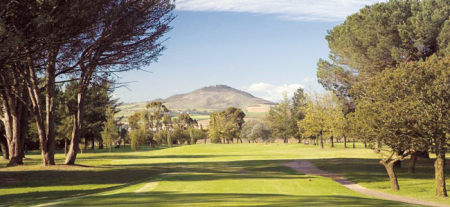
Devonvale golf courseIn the movie Up in the Air, George Clooney plays a permanently itinerant executive who is working towards his über-platinum frequent flier status, by reaching one million miles.

It’s a bittersweet reward, because that much travelling means that he’s never at home. And, of course, it means that he is single, which is central to the plot of the movie. Spending this much time travelling has turned him into something of a ninja in the way he packs, negotiates airports, handles hotel check-ins and more.

In my time with Cloof I spent seven years flying in excess of 100 000 miles per annum. It doesn’t put me into quite the same league, but I can completely relate to the travel ninja side of things.

I missed achieving Platinum status on SAA Voyager by less than 5000 miles four years running, and then made it for my final two years. If all I’d done was jump on a plane to just about anywhere in each of those first four years I’d have made Lifetime Platinum. But, I wasn’t going to spend either company – or my own – money on a frivolous trip, so I missed achieving that coveted status.

Thanks to all this flying, I was invited to play in the SAA Voyager golf day at Devonvale this week. I suspected there would be some decent prizes on offer, and wasn’t disappointed when we reached the first par three, the fifth hole. On offer, for nearest the pin, was a prize of 48000 miles, enough for an upgrade to business class, or almost enough for an economy return to Europe.

I’ve seldom swung a six iron better, and the ball flew true and straight. It was going straight for the flag. I felt more than a flutter of excitement – with a good seasoning of anticipation – as I watched the ball descend. The ball, in golfer’s parlance, was “all over the hole”. The ball did, indeed, land on the green, but then kept rolling to just off it. Damn that intermediate distance (155m) with a little wind from behind! The same strike with a seven iron would have put me onto an airplane.

golfoutletsusa.comThe prize for the longest drive, on the tenth, was two economy tickets anywhere in South Africa. Because of the hill I couldn’t see where my drive ended, but I knew it was pretty good. Whatever flutters of excitement I felt when watching my lofted shot at the par three were magnified when we crested the hill; my ball was a good 50 metres beyond the board’s current position. I wrote my name onto the board with firm strokes. Man, it felt good!

With just two groups behind us I felt quietly confident that I would, now, be preparing to fly somewhere for free. But, no, as we teed off on the next hole I looked back, and saw a brilliantly white ball roll past my marker.

Our four-ball finished four strokes behind the winning team, which seemed agonisingly close. We immediately started counting up all the missed putts, or putts that did everything but go into the hole.

Those were the biggest prizes I’ve ever swung a golf club for, and they were so nearly mine. But, like those four years of narrowly missed Platinum, it’s a simple, black-and-white matter of yes or no.

A miss, as they say, is as good as a mile.

A new view of mountain biking, thanks to Wines2Whales

Oscar Foulkes November 9, 2011 Uncategorized No comments

It should trouble me, when pulling on my cycling shorts, that Lycra is the primary component in a lot of women’s underwear. Even if it did, it appears not to bother the thousands of other 40-something men I see at various mountain biking events, or doing training rides on Table Mountain.

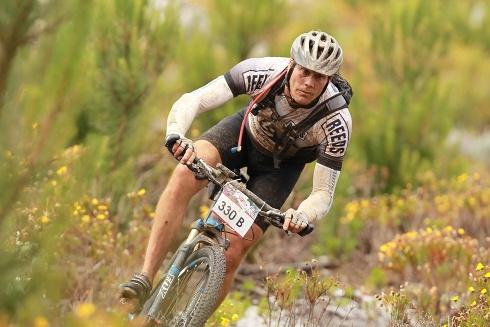
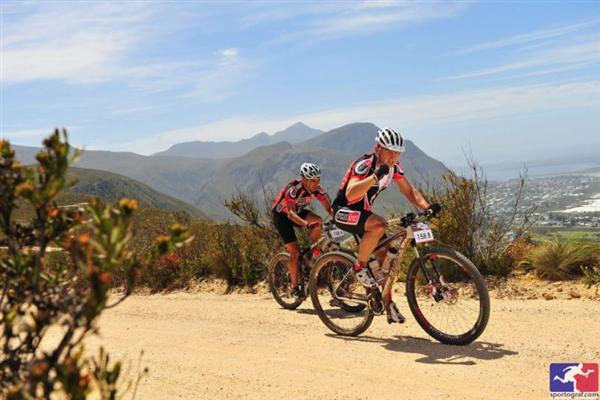
I did my first-ever mountain biking stage race over the weekend, in the form of the hugely popular Wines2Whales, which traverses 213 bad-ass kilometres between Lourensford wine estate (Somerset West) and Onrus (near Hermanus) over three days. Lycra, once again, made a bold showing (a friend has pointed out that her husband’s bib-type cycling shorts cost more than her wedding dress did 17 years ago).

In my jocular, pre-race mood, I opined that mountain biking is the new mid-life crisis. As mid-life crises go, this one is rather benign, in that it doesn’t involve extra-marital affairs, or other such sordid stuff. Indeed, a fit 45-year-old has a better chance of being a healthy 65-year-old than his overweight couch-potato equivalent (barring, of course, the ever-present danger of a fall that results in a broken shoulder or collar bone).

Mountain biking is also about toys, expensive ones. The latest carbon-fibre frame is not a prerequisite, but there is something more than a little ridiculous about a man 10kg overweight spending a fortune on bicycle components to save 500g in weight.

The ride itself is no joking matter, covering large distances off-road, with its many single-track sections adding to the uphill workload. Much of the downhill single-track is technical, some of it to the point of mild fear (not the same degree of fear for all riders, admittedly). The route traverses some of the Western Cape’s most beautiful landscapes, much of it covered in Fynbos. It is nothing short of spectacular.

One of the features of day one is the portage section up the old ox wagon trail on the Gantouw Pass, where the wheels centuries ago left deep ruts in the rock. It’s hard enough carrying a bicycle up, I couldn’t even begin to imagine dragging ox-wagons up the steep trail. Awe-inspiring stuff.

The highlight of day two is the abundance of exhilarating single-track on Oak Valley, with another long single-track descent through the Lebanon forest. We were star-struck at the end of all that.

The top of the last hill on day three, with Hermanus in the background

Day three was fast to begin, as we made our way from Grabouw to Bot River, which is mostly downhill. I made an unscheduled dismount from my bike on a very steep switchback above Houwhoek Inn, for which I blame the spectators sitting on that corner, who were calling to me to be careful. The videographer who was positioned there for exactly this reason could have some entertaining footage of me hitting the ground running, as I went over the handlebars!

The rest of day three, a long climb to the top of Hemel-en-Aarde Valley, before a final climb above Hamilton Russel, was long and hot. And, as we approached the last few kilometres, there was a fast single-track section alongside a river. It felt was if the day’s route had been crafted with all the drama of a blockbuster movie. And then, in a final twist to the tale, my bike had a bad puncture with less than a kilometre to go (although this wasn’t as bad a breakdown as the guy we’d just passed with a broken chain).

Like many other stage races, Wines2Whales is ridden in teams of two. I’d ridden once with my partner, for an hour nine months ago, which is the only time I’d ever met him. Both of us took a risk, because there’s nothing worse than riding with someone who is either a lot stronger, or to whom one has taken a dislike, but it worked out very well (please, no comments about us both having sore bums).

I couldn’t say that I felt like a sprightly teenager the following day. It’s not only one’s legs that feel it; mountain biking taxes the entire body.

Yes, there are elements of Rudyard Kipling’s If about the experience:

If you can force your heart and nerve and sinew
To serve your turn long after they are gone,
And so hold on when there is nothing in you
Except the Will which says to them: “Hold on!”

Regardless of age, Lycra, or expensive bicycles, at some point the unyielding terrain brings you face to face with your “Will”. Around you, mates are sucking up the same pain. You’re doing all this in picture postcard landscapes. And, of course, there’s the downhill single-track, which is mostly flat-out fun, but which also has its moments of ‘fear factor’. You can’t fail to feel great having faced your vertigo demons, and seen them off.

The whole thing, from start to finish – especially finishing – is extraordinary. I may have started the experience with some irreverent views of 40-something-year-old mountain bikers, but ended it knowing why so many people take part year after year. I’ll be back!

An interesting aside: The two classes of my son’s grade at school comprise 50 boys. Fathers of six of these boys took part in Wines2Whales, which is a remarkable percentage.


The Medium of Media

Oscar Foulkes October 29, 2011 Uncategorized No comments
Kindle Fire

Amazon is (misleadingly) pitching the Fire with an image of a Vanity Fair magazine cover, but Kindle only sells Vanity Fair's special editions.

The transition from horse and carriage to motorcars killed the market for buggy whips. It’s the classic – probably clichéd – example of how shifts in technology can send industries into decline. The story told in my family is that ostrich feathers went the same way because elaborate, feathered hats didn’t fit into cars as well as they did into carriages (my great-grandfather made a fortune farming ostriches; sadly none of it reached me).

In time, the printed media industry will provide many case studies of businesses that went the way of the buggy whip, but it could as easily yield examples of brilliant adaptation to shifts in technology.

The first revenue stream to take a pounding from the Internet was classified advertising in newspapers. Websites are free, searchable and just do an all-round better job. But it’s also in their mainstream content that newspapers have been nailed. With a variety of online sources we can curate our own news service, and get it well before newspaper sub-editors have even started thinking about clever headlines.

For many of the same reasons, magazines are also having a tough time of it. Plus, they have new competitors for their advertisers’ budgets as brand owners chase eyeballs on the Internet.

OK, so it’s not as if they haven’t tried. Every printed publication has a website, which in most cases represents a huge investment. The problem is this: no-one has any idea how to convert the web presence into profit. The two main reasons, I’m assuming, are that Internet users are used to consuming content for free, and the title’s website is not the main focus of the business.

Having dabbled with an Android tablet, I was given an iPad for my birthday (iPad is much better, in every respect). So, I’ve made a pretty serious effort to buy tablet subscriptions to my favourite magazines and newspapers. I really have tried very, very hard.

The most surprising of the lot was Fast Company, which I admire for its championing of the most innovative – and environmentally friendly – stuff in technology and business. If any magazine is going to have an app for tablets, surely Fast Company would be top of the pile? They didn’t even bother to reply to emails sent via the ‘contact’ function on their website, and if they do – indeed – offer an electronic subscription, they do a fabulous job of keeping it a secret.

Fortune magazine offers its content on iPad to US print subscribers, but not elsewhere. They, also, did not respond to my email to their customer service department. In any case, the point was to avoid the printed version altogether.

The reasons why I want tablet subscriptions are pretty straightforward. Firstly, I don’t need to wait for postal delivery (costly if it’s airmail). Secondly, why deplete resources (and poison the environment) by manufacturing paper, printing on it, and then transporting it halfway around the world? Finally, the magazine delivered to my tablet represents a zero variable cost to the publisher, which is a benefit I’ll happily share with them.

OK, so let’s have a look at the titles that are available on app. Firstly, there’s Vanity Fair, which has a quite splendid iPad app, but nothing on Android. And, despite the Kindle Fire being pitched with pack shots that show Vanity Fair on the screen, there’s no obvious availability of Vanity Fair on Kindle (other than the special editions). Single issues sell on iPad for what appears to be the full cover price. The subscribe option is confusing, in that it’s described as a one month subscription. However, the cost of this is $3.99 per month, an eye-watering multiple of the $29.99 that US subscribers pay for 24 months.

So, you see there is a challenge for publishers. It’s not just a case of being ‘digital’, perhaps by means of a website. They actually need an app, but having drifted into this territory, they need an app for each of the major platforms.

The UK’s Financial Times (FT) has a pretty good app that is available on both iPad and Android. It’s also on Kindle, but not available for download in South Africa. I happen to be a print subscriber to the FT Weekend, which gets delivered to my home. Today being Saturday, I was loving reading the FT Weekend a full day before the physical paper gets delivered. But my love ran out when a message popped onto the screen, advising me that I’d read my 10 free articles, and would need to subscribe to get more. The problem is that they offer just six-day subscriptions (i.e. no opportunity to select the FT Weekend only), which doesn’t suit my consumption pattern. And, I resent paying the normal subscription – which includes the cost of printing the newspaper and postage – when receiving it digitally (on a device that I’ve paid for).

The whole point of doing stuff digitally is that you can shape – or customise – your offering to suit your customers. And there’s no variable cost.

I realise that budgets are tight these days, and that publications’ first round of investment in delivering their content digitally may not have resulted in a proper return. This may have reduced their appetite for making further investments in ‘digital’. However, apps are different. We expect Internet content to be free, but we’re generally willing to pay for good apps. Hence, I would expect publications to find it easier to convert app-delivered content to cash.

Right now, I’m in such a state of frustration at the FT that I really don’t know which is worse; having the apps, but not making it easy for readers to buy a package that suits them, or not having them at all (like Fast Company, which should know better).

Whatever the case, my sympathy for the plight of magazines and newspapers has run out. Move with the times, or you’ll go the same way as the buggy whip.

#StartSomething

Oscar Foulkes October 17, 2011 Uncategorized No comments

A few months ago I wrote a post in which I pondered whether democracy was making the credit crunch worse (read it here). The thinking is that politicians are in business to get elected, so they are highly unlikely to implement unpopular policies, even if they are the correct ones.

Of course, politicians not only need to keep voters happy; they also need to worry about the sources of their campaign funds, and in this respect the Occupy Movement represents a somewhat thorny problem. Having started in Wall Street – the symbolic home of the wealthy elite – Occupy has popped up in cities all around the world.

One of the issues being touted by Occupy is vast – and growing – economic inequality. Someone has helpfully put together a fabulous collection of graphs, which illustrates this phenomenon in the US.

Without that tiny, but fabulously wealthy, grouping about which Occupy is protesting, campaign coffers would be a lot emptier.

Thus far, Occupy does not have a straightforward list of demands or objectives. Based upon photographed placards, these are largely based on anger against the profits (and bonuses) at bailed-out banks. You couldn’t really argue against the obscenity of banks using zero-interest public money to play the arbitrage game. Especially when it was their bad lending practices that caused the problem in the first place, and the bail-out funds were intended to circulate through the economy.

However, I seem to also be getting a sense from some of the placards that portions of the Occupy movement are looking for their own bail-out, which looks far too close to ‘hand-out’ for comfort.

US unemployment of 10% is very, very high by their standards, and probably higher if discouraged work seekers get factored into the stats. I can understand their discontent, and have – in fact – been predicting civil protest for some time.

Steve Jobs was in the news last month because he retired from Apple. Then he was in the news again because he died. He is one of the world’s most revered business leaders for good reason. One thing I need to point out, though, is that he and Steve Wozniak started Apple in a period of economic recession (while you’re scrolling through the excellent graphs referenced above, pause for a moment on the seventies). #justsaying

Occupy can protest all it wants – and it may yet become an important catalyst for changing a political system that (especially in the US) is dysfunctional – but prosperous economies need entrepreneurs. It would be really sad if a protest against greed and inequality diverted its supporters’ attention from the need to take action in their own lives.

America became the world’s largest economy thanks to its entrepreneurs who started small businesses and made them big (in one of the world’s ironies, some of the same people that Occupy is protesting against). The country is in trouble because its government – and citizenry – spends more than it earns, and much of its manufacture has been outsourced.

Protest is certainly valid, but somewhere along the line someone needs to take positive, productive actions. I do hope that Occupy is as good at this part as it is at crowdsourcing.

I’ve subsequently come across one of the more positive tangible outputs/vehicles of the Occupy movement: Occupy The Boardroom. It aims to “encourage peaceful, non-violent, political protesting” by creating a medium for people to communicate directly with the board members of the large banks. The mailbag has its fair share of ‘fringe’ comments, but there are also heartbreaking stories of ordinary Americans battling to get through life. For those of you into this kind of thing, the home page is also brilliantly designed, from the perspective of making it really easy for visitors to know what action to take next, and then to do it. Check out the screenshot below:

My Urban Farm

Oscar Foulkes October 17, 2011 Uncategorized No comments

We are weeks away from the world reaching a population of 7 billion (31 October, apparently), which adds up to a lot of mouths to feed. The conclusion, by institutional investors who have been snaffling up farmland around the world, is that food security is the ‘next big thing’. So, it’s not enough for them to speculate on agricultural commodities; they’re now making the land expensive as well. I suppose it’s also an extension of next-to-zero interest rates and rather dismal markets. The money has to go somewhere, at least from an investor’s perspective agricultural land has a tangible output. Factor in scarcity value as a result of population growth, and it looks like a reasonably safe – if unexciting – play.

Fortunately, my family is well-positioned for this. The arable patches around our house are busy getting extended by the addition of plastic milk crates, converted to planters with the addition of soil and compost, positioned in sunny spots around the garden. I haven’t yet promised fresh edamame or white asparagus, but rocket and spinach appear to be growing in abundance.

The next phase of this project is to set up a grey water system, so that our bath and shower water can be used to irrigate our little urban farm.

OK, so this may not be as sexy as the various urban produce farms sprouting on rooftops around the world, but it’s a start. Their rationale is that transportation and storage costs comprise between 40 and 60 per cent of the selling price of fresh produce. Anything grown onsite saves both the monetary and environmental cost of this component.

What I can attest to is the quality of something that’s been grown three metres from my kitchen door. It’s impossible to have anything fresher, which also means it tastes fantastic. And, if the whole family has been involved in its production, I find that everyone has a greater interest in eating vegetables.


Some Tools for Bryce Lawrence

Oscar Foulkes October 11, 2011 Uncategorized No comments

Bryce Lawrence has dug a pretty deep pit for himself. It’s one thing to be a pariah in South Africa; in a perverse kind of Tri-Nations, he’s managed to achieve that status in Australia and Britain as well!

As far as rugby is concerned, he may have limited his employment prospects as a referee. Perhaps he has a future as a coach, in which case these resources may be useful to him:
How to Play Rugby
Ashley Jones’ strength and conditioning programme for Rugby players

If he’s a betting man, this guide to betting on rugby could also be useful.

I guess, though, that he’s going to feel a bit short of friends, in which case either of these could be useful:
Make New Friends
Making Friends Made Easy

A Failed Attempt at Revenge

Oscar Foulkes October 10, 2011 Uncategorized No comments

Given the funereal mood that has descended upon South Africa since our loss to Australia in yesterday’s quarterfinal Rugby World Cup match, it may seem inappropriate to praise an Australian for anything.

Actually, in this case it was a Kiwi, in the form of “criminally incompetent” referee Bryce Lawrence, who was the main villain. Lawrence’s sin (committed many times over) was one of omission – who knows, perhaps it was by commission – in that he declined to penalise the Australians for numerous infringements at the breakdown.

The praiseworthy Australian I had in mind is David Thorne, famous for his Missy the Cat posters and drawings of a seven-legged spider in lieu of moneys owed. You can read the full archive on his website.

In his various email exchanges, Thorne draws his victims into a spiralling exchange that never fails to amuse. In fairness, some of these are used as retribution for times when he has been the victim, and is getting back at someone who has wronged him.

So, last week I had cause to vent (on Twitter) at Nedbank over an additional charge that I was expecting to be levied. The communication was then moved onto email, but it didn’t really go anywhere. Firstly, the person on the other side was confused because the charge had never actually gone through. I was feeling aggrieved at the expectation of the charge, as well as their failure to use two of the world’s most powerful words: “We’re sorry”.

Inspired by David Thorne, I then sent a longish email in reply, which elicited a professional response that very nicely put me in my place – and didn’t even get close to spiralling the exchange.

I would have to declare the score on this exchange Nedbank 1 – Oscar 0.

David Thorne scraps with individuals or small companies. If he has attempted to draw large corporates into his exchanges they appear to have kept it uber-professional (like Nedbank did here). I suspect he also succeeds because – like Australia’s open-side flanker, David Pocock – he is quite happy to scrap for the ball in contravention of rules. Thorne has a way of getting up his protagonists’ noses, to the point where the exchange becomes really funny for us readers.

A few weeks ago, Whackhead Simpson prank-called the FNB call centre, turning their employee Sherwyn into a company hero. Reportedly, he’d had several other call centres hang up on his attempts. His exchange with Sherwyn was marketing gold for FNB, in the way it brought the sincerity of the bank’s “How can we help you?” to life.

I have made people angry, although I hasten to add that this has always been unintentional. I have no internal difficulty writing something with the intention of inducing emotional responses (e.g. laughter or tears), and regularly write material that is aimed at getting people to buy stuff. But I’m far too polite to intentionally get people’s hackles up to the point where they start losing their composure.

In the case of Bryce Lawrence, though, I think I can make an exception.

Subsequently, Whackhead Simpson pranked Bryce Lawrence here.

A Healthy Dose of Rationality

Oscar Foulkes October 3, 2011 Uncategorized 1 comment

We humans are not nearly as rational as economists would have us believe. Or, to borrow from behavioural economist Dan Ariely, we are irrational, but in a predictable way.

The shopping centre closest to my home, Gardens Centre, has an excellent tenant mix, and is well supported. For as long as I can remember it has had a health shop, which sells (OK, sold) a wide range of homoeopathic remedies, as well as the dietary substitutes necessary for the thousands of people who these days seem to harbour all kinds of intolerances. Visit us here sideeffects

From a rational, strategy perspective, it seems like a business model tailor-made for modern trends in eating, organics and holistic health.

However, much to everyone’s surprise, the health shop recently closed. Now, there may be a wide range of reasons why the owner of such a business would close it, but I’m guessing that a surfeit of sales would not be a reason for shutting the doors.

At the other end of the centre is a German meat deli, which runs a queue for its bratwurst rolls at lunch time every day. It’s a business that appears to be in rude health, even if its patrons may at some point start suffering the effects of eating an excess of animal fat.

So, the health shop closes, but the artery clogger thrives.

The difference is this: the benefits of following the healthy living option may only be felt in years to come (assuming you haven’t been run over by a bus first). On the other hand, the satisfaction of tucking into a roll filled with pork belly or bratwurst – especially when you’re hungry – is felt immediately.

I can’t say I’m surprised. Yes, the macro-rationality says that a huge daily whack of animal fat is going to diminish either the length or quality of our lives, but we’re pleasure-seeking animals. For us, weird as it may seem, it’s rational to make the choice that delivers its benefits immediately. Even if that choice is harmful in the long term.

The same (ir)rationality applies to smoking, drug abuse and all our consumption choices that negatively impact on the environment.