
I’ve read brilliant analyses of the AI industry, many with datapoints that, to my inner nerd, are like symphonies. In aggregate, dissociated from the granular day-to-day, it’s all fascinating.
That’s good and well, but how does AI touch our lives individually? What is the human impact?
My curiosity turned into an itch, and the way for me to scratch the itch was to write about it. I turned to fiction, because storytelling enables us to orbit truths in a way that analysis-based writing often cannot.
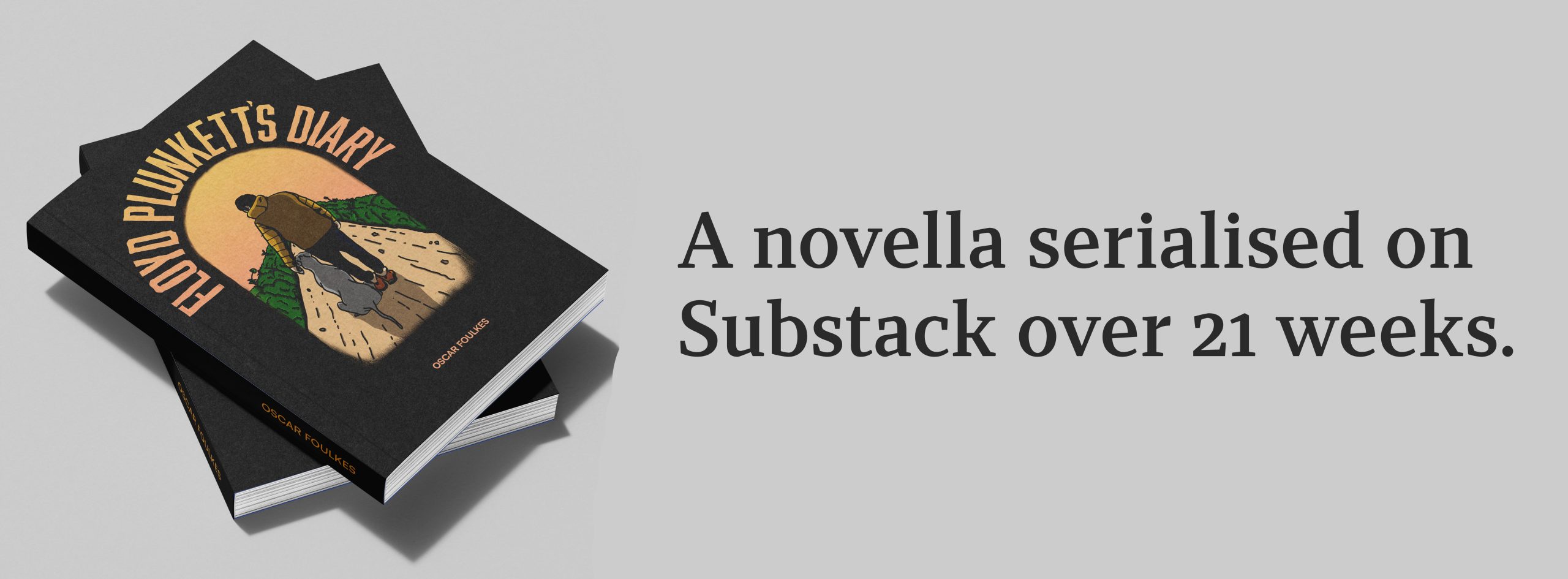
This is how I started writing the diary of Floyd Plunkett, who develops a relationship with his AI agent, Vera. Because I’m a gardener-type writer, rather than an architect, I didn’t know which direction this would go. Before I knew it, I found myself in a two-week frenzy of writing, with the creative energy of this spreading into my real life. By the time I reached the end, the story had arrived in a place that I hadn’t anticipated when I started.
For most of the AI interaction in the book, I tested Floyd’s described use of AI. As an exercise in test-driving AI, I found this part of the writing process extremely interesting. Independently of this, I have vibe coded a few applications that I use daily. This has given me a broad spread of experiences in using AI.
The AI dialogue comes from the actual responses received, and many of the AI failings were real examples. This put me in the situation of having to check the ‘partial’ AI box when publishing Floyd Plunkett’s Diary to Kindle. To be clear, no other part of the text was AI generated.
The Prologue and Chapter 1 are live on my Substack, with forthcoming chapters added every Friday. If you want to dive into all of it immediately, Floyd Plunkett’s Diary is available on Kindle (click here for that).