
I had a friend with a small wine estate in a lesser part of Bordeaux, who worked out what percentage of his annual production could be allocated to his personal consumption. While the volume he calculated allowed the business to remain healthy, the remainder allocated to his daily drinking was a figure many multiples greater than would be acceptable to a doctor. As idiosyncratic as his logic seemed, it remained a business plan.
The business plan for an independently owned stud farm calls for levels of creativity that make me think of him. It certainly requires the sense of humour with which my friend approached everything he did.
There are many whys and wherefores that determine the selling price of Thoroughbred yearlings, which are the output of our farming operation, and these factors become even more complicated when the yearlings are sold at public auction. Nevertheless, auctions are the mainstream way of selling, and for most breeders represent Plan A (without B, C, or others in reserve).
Continuing my informal series on what happens behind the scenes on a stud farm, here’s a look at the-horse-who-would-not-be-sold.
Plan A
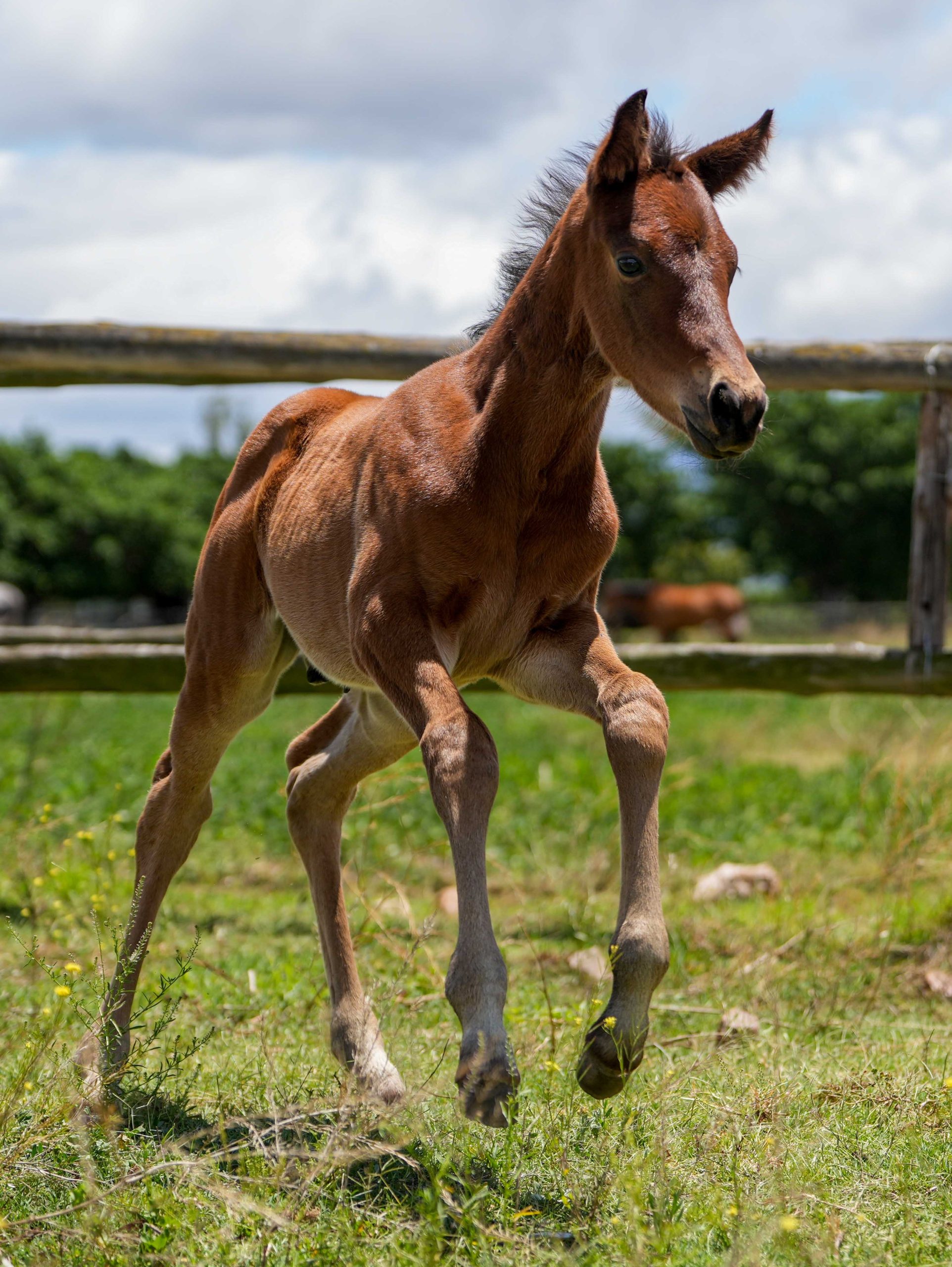
This Legislate colt, out of the mare Tuuletar, was included in our January offer of yearlings for sale off the farm (i.e. direct, without going to auction). I should mention that he was priced at a fraction of what Legislate colts sold for this year. Many of our other yearlings were sold either immediately, or during the year, but no-one picked this guy. I put it down to his immaturity and his slightly smaller size, because the strike rate of his sire, Legislate, is the best of all stallions in the country. Furthermore, Legislate’s poor fertility means that his progeny are scarce. I have joked, somewhat seriously, that they’re like unicorns. However, this one is just a brown horse without the flash that would attract attention. One could say that in the world of little girls’ toy unicorns, he’s the one without the bedazzle. That’s not to say that flashy horses run faster; they are just easier to sell.
Plan B
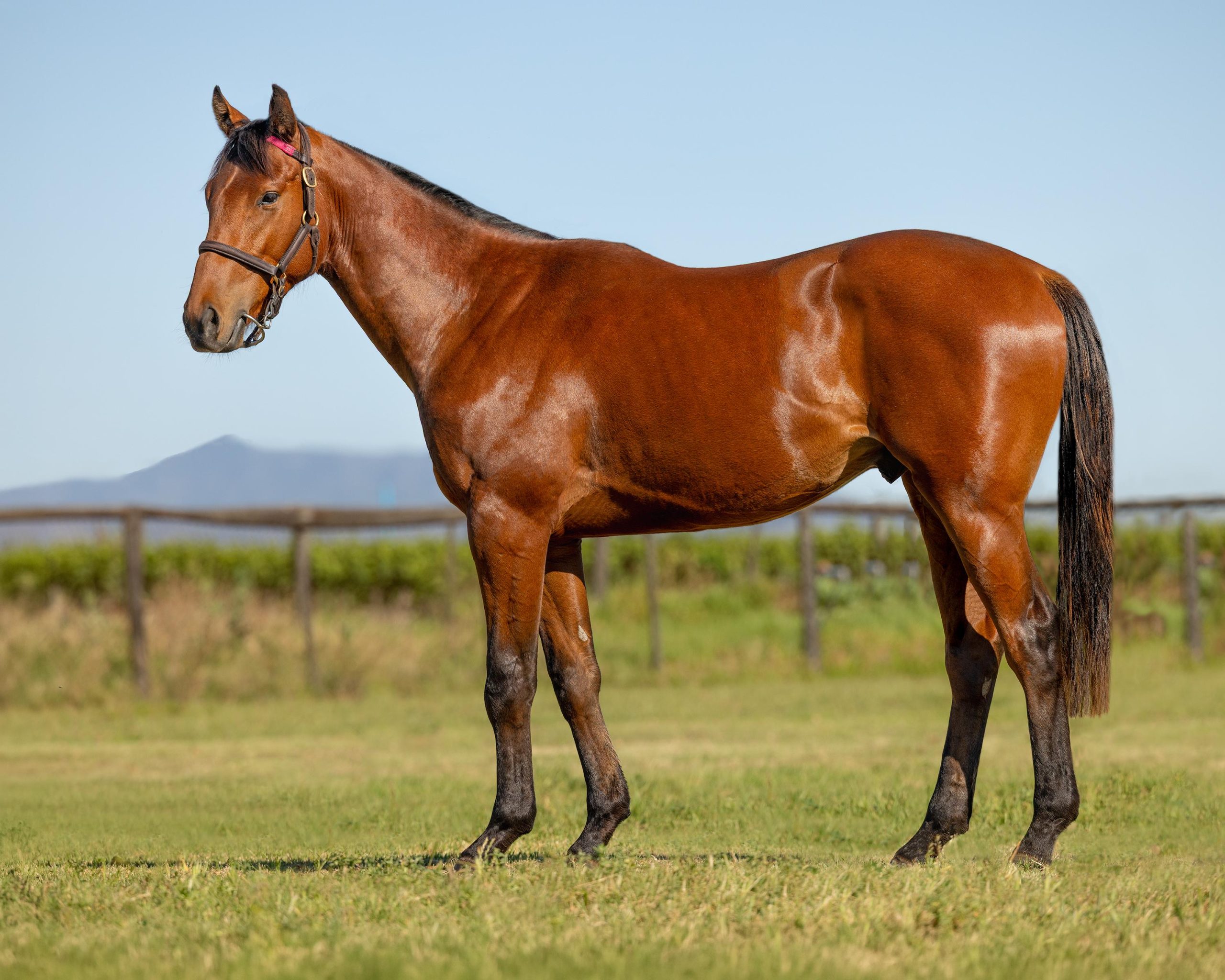
By the time entries were due for the final auction of the year, a sale of two-year-olds in October, I had to accept that my initial plan had failed. After all, I’d given it a full go from January to July. With Legislates winning races at the highest level, I was confident that he would find a buyer at the auction.
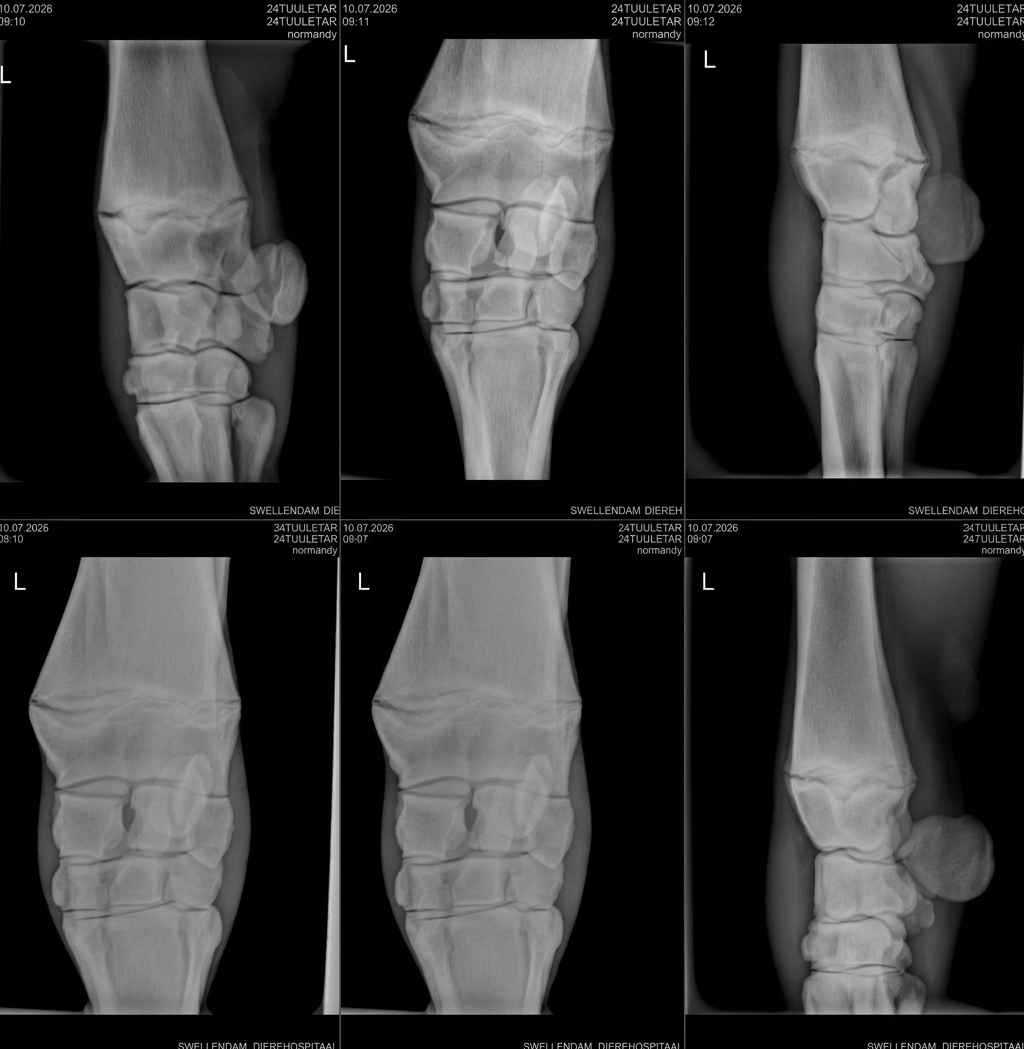
Two months before the auction, he suddenly had a swollen knee, presumably because of playing rough with his paddock mates. He was never lame on it, but the swelling would put buyers off. So, we followed the usual treatment: applying a DMSO wrap every night for an extended time. This made no change, so I had the knee x-rayed to see if there was anything happening in the joint. Everything was clear, so I had to accept that this was an unspecified soft tissue thing that wouldn’t cause him any problems in his future career.
Two weeks before the sale he was slightly lame, because of a little knock on that same knee. He went onto box rest, and was recovering quickly, but I couldn’t take him to the sale, so he was withdrawn.
Plan C
I thought there was a decent chance of selling him out of hand after the sale, because of him being a good mover by Legislate, but no enquiries were converted into serious offers. Even the budget price seemed to be insufficient enticement.
Plan D
With Plans A, B and C thwarted, it’s now down to Plan D. If this colt was a bottle of claret amongst thousands produced, I’d happily follow my friend’s lead and pull the cork, metaphorically speaking of course. However, he’s one of just 20 in this crop, having to contribute his share of the farm’s annual costs. So, Plan D it is. To be honest, I’d happily default to Plan D for all the horses we breed, but cash flow is sanity, so it only comes into play once A, B and C have been tried.
Plan D may look like a swing for the fences, but it comes in stages, each of which costs more money. The first part is to get the colt into pre-training, during which he will be backed, and his fitness will be built over the course of about three or four months. Then he will move to a trainer to begin serious preparation for his racing career. The duration of this stage is hard to predict at this point, but with the colt being by Legislate – a stallion whose progeny start coming into their own as three-year-olds – this is not something to be rushed. In truth, I should not expect him to see a racecourse until July or August 2027. This assumes, of course, that his knee doesn’t turn into a long-term problem.
Once he gets to the races, there are a few possibilities. The first is that he’s slow, in which case we’ll find him a forever home as someone’s beloved hack (without producing income, and having cost a lot more in training fees in reaching this point). The middle option is for him to get to the races, showing enough promise to elicit interest from a trainer elsewhere in South Africa or from Mauritius, in which case he’ll produce some income.
The third option is that he runs like an above-average Legislate, in which case I’ll recover many times his production cost as well as the further expenses of pre-training and training. This level of upside represents the principle of optionality. His production cost is already incurred, and the expenses to follow are both known and can be limited. The payoff could be very good. However, it remains an ‘if’. Nothing is certain. This is a situation with many unknowns.
Even without reaching the best-case scenario, that he’s well above average, my judgement would have to survive contact with reality. How confidently can I back myself, and how realistic is the possibility that there is upside to this exercise? Am I better off taking the first offer, regardless of how low? Are personal sentiments getting in the way of me accepting the market’s verdict?
Plan E
There is another possibility, a derivative of Plan D: splitting this colt into smaller shares, through syndication. I’ve syndicated many horses before, so this is not new territory. If Plan E is concluded successfully, there will be some cash flow that I can count on.
There is another angle to this plan. Any partners would need to be on board for the same exit strategy as I am. Someone owning 5% will get more utility from the entertainment of owning a share of a competitive racehorse than from the sales proceeds. Our priorities would be aligned if my share was small, say no more than 10%. In that case, I would also be happy to stick around for the fun of it. On the other hand, if my share was 75%, I would certainly want to sell if a good opportunity came along, and this may not accord with the partners’ preferences.
Plans D and E both start with pre-training, so I can take the next step without closing off either option.
The Name
Our yearlings are sold unnamed, so that their new owners have the fun of naming them. Seeing as I’ve embarked on this project, he’s mine to name. I wanted something strong with a parliamentary reference (i.e. where legislation is passed). The name I’ve applied for is Hansard, as in the official record of parliamentary proceedings. I really hope that the National Horseracing Authority allows that, because it feels like a good name for a horse with prospects.
I’m not ready to give up on him, and his apparent rejection by the market makes me even more determined to give him a chance. If Legislate’s strike rate is anything to go by, there’s a good chance he’ll win at least one race. The question is whether he has a hero’s journey in him.