
We are blessed to live in a household spanning multiple generations, from my mother (until October last year this was both our mothers) through to our adult children. The perfect evening is to have everyone around the dinner table eating a meal that we’ve all had a hand in cooking, which also gives me an excuse to reach into the wine fridge for a special bottle.
When we’re a smaller group home for dinner we might sit at the kitchen counter, but we could also eat on our laps while watching TV. It is at this point that the TV remote resembles a grenade with the pin pulled. No-one wants to be the last one holding it, because finding something to watch can be a challenge.
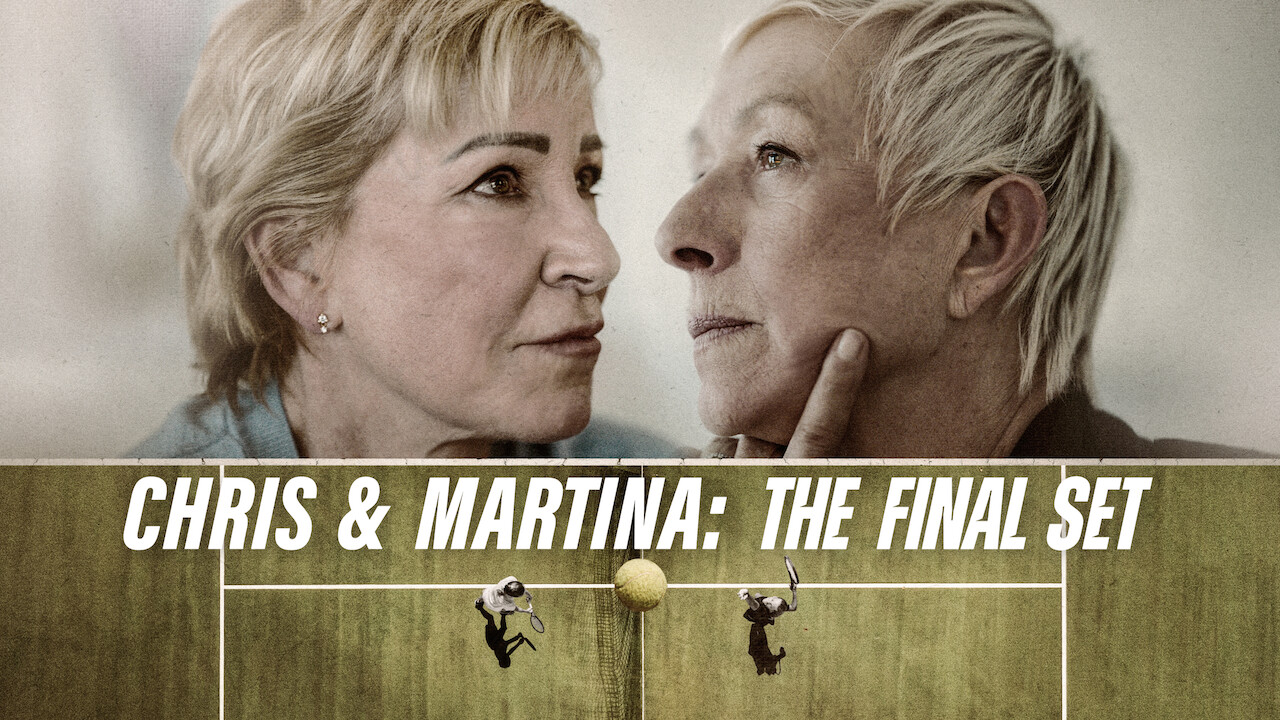
My solution for losing this version of musical chairs is to find a documentary. There’s the David Attenborough version that takes us on a magical journey into the natural world, or riveting epics like 14 Peaks: Nothing is Impossible. Last week it was Chris & Martina: The Final Set, a story based on one of sport’s greatest rivalries. I found myself close to tears for almost the entire arc, from their emergence as mid-teen tennis stars, through their world dominance as adults, to their cancer treatments.
Truth can be more emotionally powerful than fiction.
We watch movies and series for a bunch of reasons, one of the prime ones being that they ‘take us to another place’, even if it’s just vapid escapism. The Chris and Martina documentary didn’t take me elsewhere, rather it took me to a place I’d forgotten about, back to my own brush with cancer.
There is more about this experience in the depths of the archives here, so for the benefit of newer readers, the short version is that I discovered in 2006 that I had cancer on my vocal cords. The ‘tell’ was that I had progressively been losing my voice. What followed was two surgeries in 2006, another two in 2012, one at the end of 2015, followed by a six-week course of radiotherapy in 2016. There was another surgery in 2017 to open up a web that had grown in the V at the tip.
Each of these was marked by the most excruciating pain, followed by me losing my voice all over again. I spent many months barely being able to whisper. On this point, it was also emotional to watch Jordi Roca, who lost his voice, in Chef’s Table: Pastry.
During, and after the radiotherapy, my diet consisted of soup and morphine, as the scab covering my entire neck area was replicated in my throat. I never had chemotherapy, but this seemed to be an equivalently punitive treatment.
I never had any mortality concerns, because this form of cancer rarely metastasizes, but I’m sure that my immediate family had fears they never let me see. My children watched me go in and out of hospital for 10 years, sometimes being able to speak and when I did, in a voice that was foreign, but which became normal.
The reason for going into this detail is not to evoke sympathy. Rather, I’m hoping to illustrate some of the nature of the memories that got buried when I just got on with being resilient and then recovering my strength to the point of being able to participate in Cape Epic 12 months after finishing treatment.
People talk about us remembering things on a cellular level, which may or may not be scientifically possible. What I did discover while watching Chris & Martina is that my emotion was so spontaneous and unconscious that it must have come from a very deep place. When they say we learn things from documentaries, I can’t say that I expected this to be a learning.
I’m not in the camp of holding onto trauma. At some point we have to park the shit and get on with living in the moment that exists right now. However, the residue of some experiences can hide away for a long time, until they get the right trigger.
I’d like to end on what I regard as my biggest achievement while being on the receiving end of cancer, and which also contributed to my emotional response. Riding three Cape Epics back-to-back, from 2017 to 2019, should partially be put into the “fuck cancer” category, a statement of vitality, endurance, and yes, resilience. It was also an exercise in friendship, teamwork and preparation.
When my daughter, Sophie, was in her first years at school, I started reading the Harry Potter series to her before bed every night. At the point we started, half the series had already been published, so we could go straight from one to the next. The second last, Harry Potter and the Half-Blood Prince was published the year before my diagnosis, but I would already have been losing my voice. The Deathly Hallows came out the year after my first round of surgery, when I’d spent months rediscovering how to make a sound. It was nearly three times the length of The Philosopher’s Stone and, somehow, I attempted different voices for each of the characters.
I should mention that Sophie was then 11 years old and perfectly capable of reading the book herself, but it was important to both of us that we finished together what we started together (which makes it similar to the two riding partners in a Cape Epic team).
There are close to 1.1 million words in the Harry Potter books. Having read them aloud to her, even when I could barely speak, is the best kind of ‘being a millionaire’.
The Chris and Martina documentary is a great watch no matter one’s personal history, or interest in tennis. We see them in their old age as friends, with cancer adding a dimension to their obvious mortality, and contrast that with them as teenaged prodigies.
I have no interest in winding the clock back to 2016 or 2006, but the tears filling my eyes were telling me how much those ten years meant to me and those around me, and what a long way I’ve come since then.